Development Process
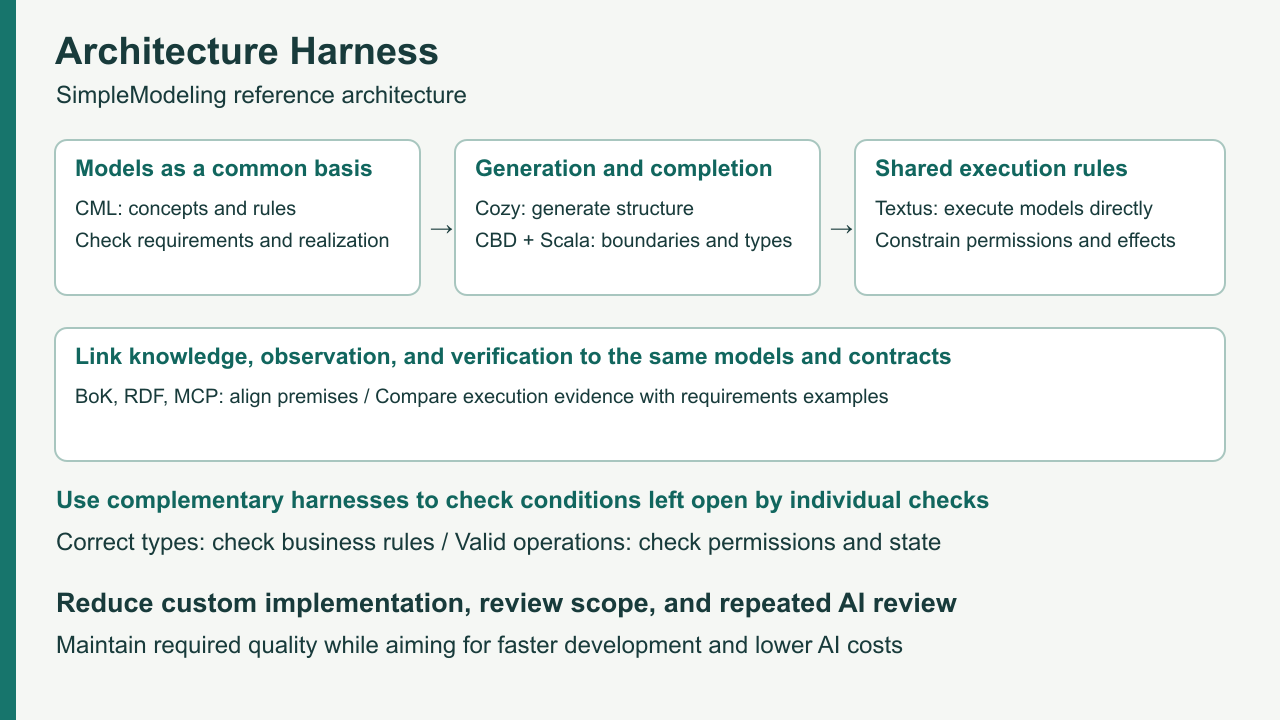
Architecture Harness
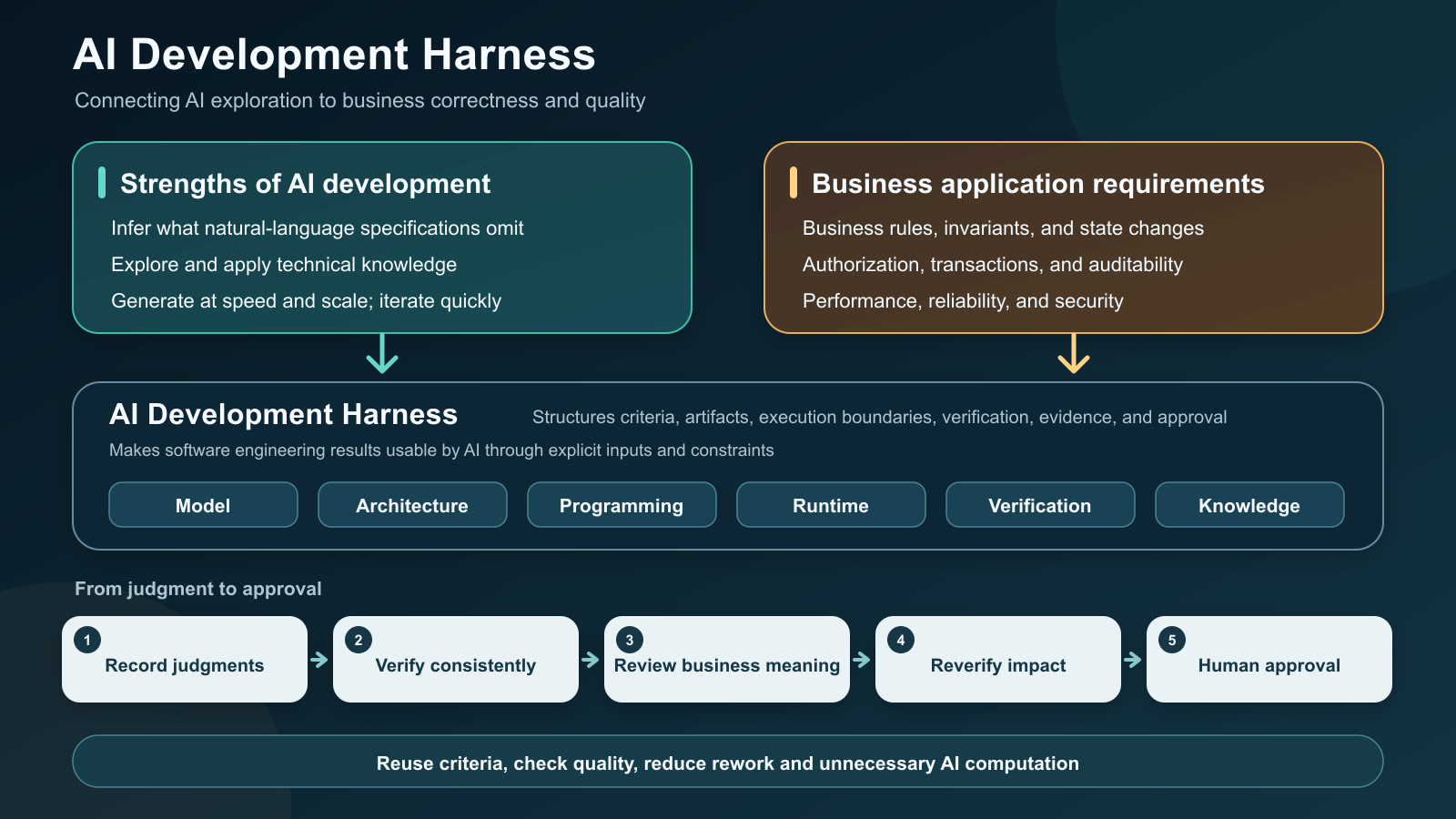
ソフトウェアのアーキテクチャは、求める機能と品質を実現するために、システムを構成する仕組み、その役割、組合せ方を定める基本設計です。SimpleModelingは、ドメイン知識に近い抽象度でソフトウェアを記述し、そのモデルを開発と実行の基盤にするリファレンス・アーキテクチャを提供します。本稿では、連載全10回で扱う技術をこの全体像に位置付け、必要な品質を確保しながら開発速度の向上とAIコストの低減を図る組合せを説明します。開発から実行まで何重もの歯止めを配置するこの設計が、AI開発のアーキテクチャ・ハーネスとしても機能します。 Read More
2026-10-19
Development Process
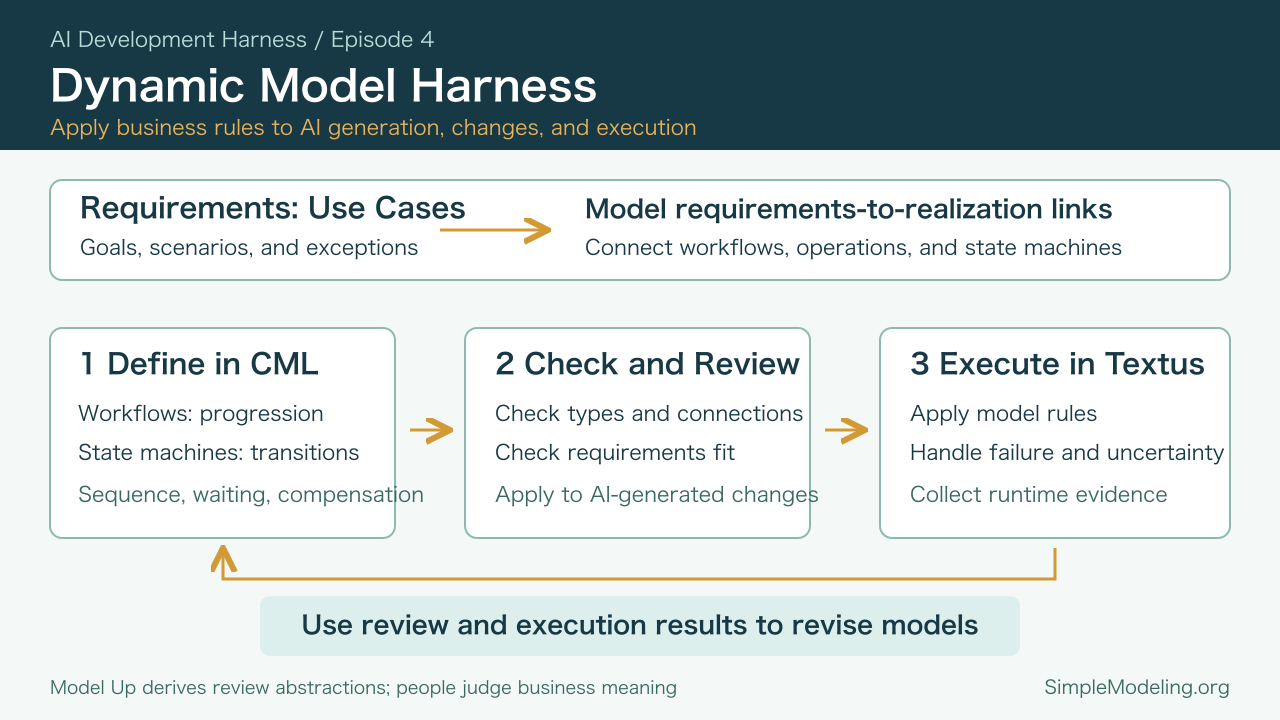
Dynamic Model Harness — Describing Business Behavior
SimpleModeling's Dynamic Model Harness uses the checking and execution infrastructure of Model-Driven Development to constrain software behavior and AI-generated changes. Processing order, state transitions, and failure handling are error-prone even in conventional programming, so defining and executing them as models has value in its own right. AI development adds the need to control generated procedural code that embeds business rules and changes that diverge from requirements. This article explains the harness through checking and direct execution of workflows and state machines in CML and Textus, and through connections between requirements and realization models. This framework makes models serve as programs in the AI era. Read More
2026-10-12